
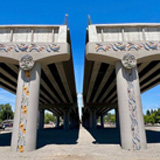
Designing Architectural Concrete with Formliners: Performance, Sustainability, and Creative Expression
About the Provider
Spec Formliners, Inc. is a company that specializes in concrete formliners for architectural and artistic impressions. They offer a variety of form liner patterns, including geometric patterns, custom patterns, and large panel art motif projects. Spec Formliners works with designers and engineers to create formliners that reproduce art motif concepts using methods such as 3-D scanning, CAD engineering, and hand sculpting. Their FROG3D® system also helps them create complex designs faster without the need for extensive manual carving.
Course questions/comments
(844) 429-9500
Learning Objectives:
- Differentiate the characteristics, applications, and reuse potential of plastic, semi-elastomeric, and urethane architectural formliner systems to support informed material selection across project types.
- Evaluate the collaborative design, specification, fabrication, and installation process for integrating architectural formliners into commercial, civic, transportation, and infrastructure projects while supporting constructability and long-term performance.
- Identify how material transparency, durability, reusability, and responsible material selection contribute to sustainability goals and support LEED v5 project strategies.
- Analyze real-world case studies that illustrate the architectural design journey, from concept through construction, to determine how architectural formliners enhance aesthetics, durability, community identity, and the health, safety, and welfare of occupants and the public.
Provided By:
Available Regions:
Continental US
Design Category:
(03) Concrete