
Deadly hurricanes, blistering heatwaves, melting ice caps, massive crop failures, catastrophic droughts, and significant economic losses are the result of carbon emissions, specifically in the form of carbon dioxide (CO2) and other greenhouse gases. Addressing carbon emissions is crucial to mitigating these devastating e...
Education Provider Program
The EPP is intended to broaden and enhance the educational opportunities available to members, by ensuring quality regulator-approved opportunities in a variety of formats that are readily available. The benefits of being part of the EPP include:
• The opportunity to liaise with ALBNL, AANB and NSAA members on an ongoing basis
• Opportunities for marketing your organization and/or event via a designated page in the CE section of our websites
• Promotional support of the educational opportunity via the ALBNL, AANB & NSAA member bulletins and on social media platforms
• EPP participants can identify themselves as Providers with a unique logo provided by the participating regulators, acknowledgement that the session has been reviewed by the participating Jurisdictions and thereby encouraging members to attend to achieve their mandatory CE requirements.
• Opportunities to participate as sponsors at events organized by the participating Jurisdictions
80 Online Courses
Premium Course
 
|
 This seminar will focus on existing buildings and how they should comply, alterations and the five elements required to be upgraded to meet the Standards once an area containing a primary function is altered. 
|
 This comprehensive course examines the emergence and evolution of Eco Brutalism, a contemporary architectural movement that merges the bold, monolithic aesthetics of Brutalist architecture with cutting-edge sustainable design principles. Design professionals will explore how this innovative approach addresses modern envi...
|
 Discover how the world's most efficient pollinators can transform your sustainable design projects. This course explores the fascinating intersection of bee ecology and green building, revealing practical strategies for architects and design professionals to integrate pollinator habitats into LEED certified projects. Lea...
|
 Whole building LCA and carbon analysis play a crucial role in promoting sustainable and low-carbon construction practices. By considering the entire life cycle of a building, these assessments help reduce environmental impacts and contribute to a more sustainable built environment. In this course we explore how project t...
|
 You're standing at the intersection of design and destiny. With buildings generating 40% of global carbon emissions, every material you specify and system you design shapes our planet's future. This intensive course transforms that responsibility into opportunity, equipping architects, engineers, and interior designers w...
|
 Digital overload is quietly undermining occupant health—and buildings are part of the problem. This course shows how design professionals can turn that challenge into a powerful opportunity. You’ll learn how to design “digital detox zones” that measurably improve focus, reduce stress, and enhance well-being using LEED an...
|
 Data centers are the most contested building type in America, and they are going up faster than the profession has figured out how to build them well. This course confronts what is actually driving the backlash: water drawn from regions that cannot spare it, grid costs landing on ordinary ratepayers, and a financing stru...
|
 Embodied carbon is the hidden impact embedded within construction materials and products and contributes significantly to our carbon footprint. By understanding the implications of your specification decisions, you possess the key to not only reducing embodied carbon, but also creating resilient and environmentally consc...
|
 In this course we describe how project teams can use Environmental Product Declarations (EPDs) for LEED v4.1 projects. Our team describes the environmental impacts referenced in EPDs and how these impacts may affect the planet and its inhabitants. We discuss how EPDs can contribute to the LEED v4.1 BD+C, ID+C, and O+M ra...
|
 This course provides architects and engineers with a comprehensive overview of the critical requirements of the Americans with Disabilities Act (ADA) as they apply in 2023 and beyond. Participants will gain practical guidance on designing accessible spaces, ensuring code compliance, and avoiding common pitfalls in archit... 
|
 This course provides architects and engineers with a detailed examination of accessible routes as required under the Americans with Disabilities Act (ADA) in 2023. Participants will learn what to look for when designing, evaluating, and documenting accessible paths, including sidewalks, ramps, corridors, and building ent...
|
 In depth review of parking according to the ADA. The speaker will cover the definitions and learn about parking spaces and the number of accessible parking spaces required.
|
 An advanced discussion over toilet rooms according to the 2010 ADA Standards.
|
 This course provides architects and engineers with a comprehensive review of key ADA requirements related to doors, protruding objects, sales and service counters, and dining and seating areas. Participants will explore practical strategies for designing and evaluating these elements to ensure accessible, functional, and...
|
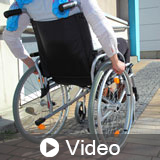 A workplace is a complicated space when it comes to understanding the requirements for accessibility. Some spaces are exempted while some require full access. This seminar gives an overview of what requirements exist in the ADA about work areas and when the ADA Standards apply.
|
 Welcome to a journey that will fundamentally challenge how you think about sustainable design. This course pushes far beyond the conventional net-zero checklists that have dominated green building practice for the past two decades. Instead, we're going to explore what happens when buildings become living entities, when c...
|
 Roughly one in four U.S. adults lives with a disability, the population is aging fast, and buildings designed today will serve people for decades. This course explores the LEED v5 BD+C Accessibility and Inclusion credit: where it came from, what it asks, and how design teams can turn it into entrances, restrooms, signs a...
|
 Construction and demolition generate more waste by weight than every household and business in the country combined. LEED v5 responds with four requirements covering reuse, product selection, waste diversion, and recycling infrastructure—and carbon connects them all. This course explains how to satisfy each requirement,...
|
 LEED v5 puts carbon at the front of the design process. Before a project can pursue a single credit, it must complete a Carbon Assessment—and that assessment can fundamentally change design decisions. This course breaks down the Carbon Assessment prerequisite, the requirements that feed it, and how to use the results to...
|