
This course provides an in-depth exploration of integrating electric and gas sources to heat domestic hot water (DHW) systems, ensuring compliance with health, safety, welfare, and occupant comfort standards. Design professionals will investigate various theoretical hybrid DHW configurations and their implementation in commercial buildings, considering their impact on building occupants. The course will discuss the tradeoffs between heat pumps and high efficiency gas units in terms of cost, emissions, and their implications for occupant well-being.

LEED General Courses
Need continuing education to maintain your LEED credential? Do you want to learn more about LEED certification? All courses offer AIA CE and GBCI credit hours applied towards your architect license requirements. All courses listed provide AIA HSW and GBCI general CE hours. Once you have completed the AIA online courses and GBCI CE courses, we will report your earned course credits automatically. AIA Continuing Ed and courses about LEED certification are available online anytime, 24/7/365! GreenCE is a USGBC Education Partner and offers free courses about LEED certification.
FREE |
 Imagine you're designing a multi-story residential complex in a densely populated urban area. Suddenly, a fire breaks out on one floor, rapidly engulfing the structure. Now, consider this: What if you had the power to significantly reduce the spread of flames and give occupants more time to evacuate safely? How would you achieve this critical objective in your design? 
FREE |
 Constructing building envelopes designed to withstand extreme weather events and the impact of drastic temperature swings, join us for this one-hour course on building with fiber cement cladding. Participants will examine the importance of building sustainably with fiber cement cladding designed for resiliency to ensure structural stability and life safety. Catastrophic weather events require that the materials that comprise the building envelope are high-performance enough to endure fire, hurricanes, flooding, extreme cold, and heat. 
FREE |
 In this course, we explore how HVLS Fans can contribute to thermal comfort, energy savings, and sustainable design. Our team explores the basics of ASHRAE Standard 55 requirements and new updates to Standard 55-2017 & 55-2020. We discuss how air movement can assist with meeting indoor air quality performance and energy performance requirements for sustainable design projects. Finally, we describe how to evaluate compliance with comfort standards in various environments and how they affect building occupants. 
FREE |
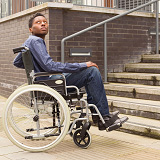 On September 15, 2010, the Department of Justice published updated Title II and III ADA regulations and adopted the 2010 ADA Standards for Accessible Design. This one hour session will address substantive changes to the regulations and design criteria which became effective on March 15, 2011 and are enforceable as of March 15, 2012. 
$35.00 |
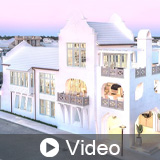 The roof of a building is not only vital as a structural component but can also be an important design feature that makes a building stand out among others. Join us in this one-hour course as we discuss the installation methods of concrete roof tile systems that minimize environmental impact while maximizing durability and design. 
FREE |
 In this presentation, we explore the WELL Building Standard and how it can advance human health and well-being. WELL v2 is an evidence-based, technically robust, resilient rating system that can help design professionals create inspiring and healthy buildings. Our team discusses the ten concepts of WELL v2 and performance testing that can help improve occupant health. We examine WELL certified projects and their attributes that make them healthy buildings. This introductory course is aimed at design professionals who want a basic overview of the WELL Building Standard. 
$35.00 |
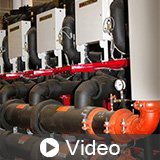 Energy costs are soaring across the country and owners are looking for cost-effective and sustainable solutions to provide hot water for their buildings. In this course, we discuss how market conditions and consumer demand are driving the move to Commercial Heat Pump Water Heating (CHPHW) systems. We describe the benefits of CHPHW systems, best practices for design professionals, and how these sustainable products can help improve energy efficiency and occupant experience. 
FREE |
 Join us on this one-hour course as we look at the top ten home storage solutions and bring to life the art of organization. This fundamental question lies at the heart of effective storage design, challenging architects, interior designers, and contractors to transform cluttered closets, disorganized pantries, and chaotic garages into harmonious and functional spaces. Homeowners and renters seek versatile storage solutions for their homes, senior housing, student housing, apartments, hotels, and resorts. 
FREE |
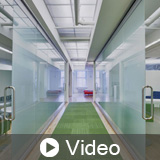 Moveable walls offer a versatile solution that goes beyond mere spatial flexibility; they contribute significantly to daylight optimization, acoustic performance, utilization of healthy building materials, and enhancement of occupant well-being and comfort. In this course we explore ADA, ASTM, and LEED v4.1 BD+C and ID+C strategies and requirements related to moveable walls. Design professionals will develop the skills necessary to incorporate these principles into their own architectural projects and leverage the benefits of moveable wall systems. 
FREE |
 This course discusses the impact of buildings on the natural environment and offers insight on designing to minimize those impacts through sun control and mastery of the elements. The discussion emphasizes implementing design methods including specification of technologies such as sunshade and daylighting canopy systems, as well as materials that contain recycled content. Designing as part of a holistic building environment is critical to optimizing energy performance and reducing extraction of natural resources for building materials. 
FREE |
 During this course, we explore how vacuum plumbing can help design professionals create projects that save water, energy, and money and contribute to sustainable design. We review how vacuum plumbing can help contribute to LEED projects and prevent the spread of infectious diseases, especially during a pandemic. Our team illustrates the differences between vacuum plumbing and gravity plumbing and how they compare regarding sustainability, health and safety, cost and design and use of existing real estate flexibility. 
FREE |
 In this course, we explore how waterproof wall panel systems are used to provide a cost-effective, easy installed, low maintenance design solution for bathrooms and kitchens. We examine the benefits of waterproof wall panels over tile and how panels help prevent mildew and mold. Finally, we discuss how sustainable waterproof wall panels can contribute to LEED v4.1 projects. 
FREE |
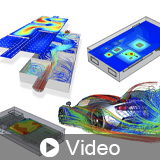 In this presentation, we discuss Computational Fluid Dynamics (CFD) and how it can be used as a tool by building designers to ensure occupant health and safety. We interpret CFD analyses to make design improvements for optimal air movement, cohesive comfort for occupants, and efficiency. Finally, we explain how destratifying a space can decrease HVAC sizing for more efficient and sustainable designs.
FREE |
 This course will go over the basics of vegetated roof construction and how the industry has documented successful installations over the last 25 years in the United States. We will teach the design requirements and standards unique to green roofs. The course will educate the participant on the benefits of the technology- including stormwater management and lowering roof temperatures. We will also provide project examples across the country that incorporate a variety of technologies such as biosolar, amenity decks, daylight harvesting, and agricultural production. 
FREE |
 Specifying a sustainable HVAC system is essential for achieving a more efficient, comfortable, durable, cost-effective, and environmentally friendly built environment. In this course, our team discusses why design professionals should specify sustainably manufactured HVAC products that help reduce waste, decrease carbon emissions, and save energy. We review how sustainable HVAC systems can contribute to the LEED v4.1 BD+C rating system and reduce environmental impacts. 
FREE |
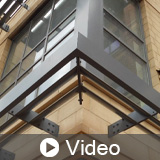 This course discusses the benefits of a thoughtfully-designed light control system and how to make it work for your project’s daylighting and design needs. The discussion emphasizes implementing best-practice methods and specification of daylighting canopy and sun shade systems to create unique and aesthetically-pleasing architectural building enhancements. The result will be a full-scope view on successfully repurposing natural light for greater environmental, human health, and aesthetic function.
FREE |
 Sustainable kitchen design encompasses environmental, health, and social considerations. In this course, we explore innovative approaches that prioritize energy efficiency, the use of healthy materials, and the enhancement of overall well-being. As the demand for eco-friendly living spaces continues to rise, design professionals play a pivotal role in shaping the future of kitchen design. Our team discusses LEED v4.1 BD+C and ID+C strategies that can help design professionals create healthier and more sustainable kitchen spaces for building occupants.
$45.00 |
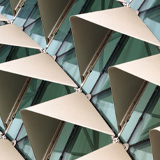 The goal of this course is mainly to create awareness about powder coating technology as an environmentally friendly alternative to liquid coatings. After this course, the design professional will be aware of the environmental and physical advantages of powder coating systems in order to knowledgably specify them in place of conventional liquid coating systems. 
FREE |
 This product is no longer available for purchase. If you have already purchased this product you may still access the course and quiz content.Use the LEED practice exam questions to assess your readiness to take the LEED Green Associate exam and LEED AP exam. The LEED practice questions simulate the actual exam and will help you prepare. The package includes 400 LEED practice questions for the LEED Green Associate Exam as well as 100 LEED practice questions for the LEED AP BD+C exam. $29.00 |
Pages
GreenCE offers AIA HSW online continuing education, LEED online courses, ADA online courses, and LEED Exam Prep. GreenCE helps design professionals obtain their AIA HSW hours, LEED-specific hours, barrier-free hours, and IDCEC CE hours. The website delivers LEED Exam Prep for the LEED Green Associate exam, LEED BD+C exam, and LEED O+M exam. The online LEED certification courses educate architects, engineers, interior designers, contractors, and students.
GreenCE is a USGBC Education Partner that offers the only free LEED exam prep in the country. The LEED certification course includes a free LEED exam study guide, free LEED practice questions, and LEED certification tips and strategies. In addition, GreenCE offers free courses for LEED APs to obtain their LEED BD+C hours, LEED ID+C hours, and LEED O+M hours. Most GBCI courses are free and in video format.
GreenCE is an AIA Education Provider and offers free AIA online courses. The free AIA courses are sponsored by building product manufacturers. In addition, the platform offers barrier-free ADA courses for Texas and California architects. Texas barrier-free online courses and California Accessibility courses meet state requirements. TX ADA courses and CA ADA courses are created by the top ADA experts in the country.
Building product manufacturers can get specified by using GreenCE services. GreenCE develops AIA and LEED courses for product manufacturers to educate architects. The online architect courses help build brand awareness about building products. In addition, GreenCE hosts manufacturer webinars for 200-300 architects at a time. The AIA webinars and LEED webinars are free for architects who can learn about various products.
"I have over 55 years of architectural experience and I still learn a great deal from your webinars. Thank you so much. The continuing education units are surely a benefit to your webinars, but not the primary factor in my joining your fine presentations."
Yoshiro Hashimoto
Architect
Unknown